


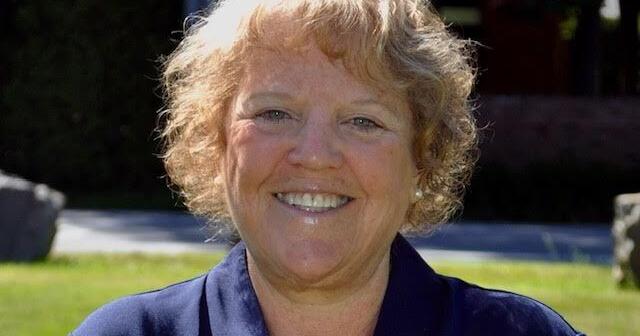


Sarita Austin (D-Colchester) is running for re-election this coming fall.
COLCHESTER — Incumbent Vermont House Rep. Sarita Austin, a Democrat, is running for re-election to her currently-held Chittenden-19 district seat in the upcoming November election.
The two seats available in this district are being sought by Austin and fellow Democrat Wendy Critchlow, as well as by Republican Leland Gazo, who is stepping up for his party as Republican Rep. Pat Brennan moves away from the House in pursuit of a Vermont Senate seat.
Austin told the Sun her decision to run for re-election this year was inspired by her background in public education and her literacy expertise, having studied English literature and taught kindergarteners for many years. She currently sits on the House Education Committee.
Austin also worked as a middle school counselor in the later years of her career, which she said gave her a more holistic perspective about the factors that impact student achievement on a psychological level.
She was initially elected to her House seat in 2018 and her first term began in January of 2019, just before the COVID-19 pandemic hit.
“It’s been interesting to see how something so unexpected and so unknown can be so disruptive,” she said. “I was really impressed with the delivery of instruction [in schools]. I know it’s not the best, it’s not good for kids socially. But in that situation, people pivoted quickly.”
Since that time, Austin feels she’s built a strong trust and rapport with other legislators as well as the institutional knowledge and ability to take in testimony and think critically about Vermont’s needs — all of which she feels are necessary for the passage of crucial legislation.
Austin has also sat on school boards as well as public safety committees, and even served as an EMT. She’s currently on Colchester’s local planning commission, alongside Critchlow.
Bringing local and state issues into focus
Largely, Austin is motivated by an ongoing pursuit of improving public education. She wants to find ways to lower the high costs of health insurance for educators and to decrease the taxpayer burden of public school budgets without degrading the quality of education.
Austin is also a huge advocate for legislation relating to data-driven ways of improving literacy proficiency in Vermont’s public schools, especially for students experiencing poverty who tend to fall behind.
Another of her biggest priorities is addressing Vermont’s housing shortage — housing being the primary issue facing Vermonters right now in her eyes.
Austin thinks solving that lack of affordable housing would address other issues, too: it’d address the issue of people wanting to move here who previously couldn’t, as well as Vermonters wanting to stick around for life in their home state.
“Without someone having shelter and a roof over their head, it’s going to be difficult to address poverty, drug use, child care and healthcare… Getting businesses to move here,” Austin said. “Just a lot of the other factors that are impacting Vermont and are costing us.”
“I love the process of working with people you know to find solutions, to kind of create a process where everybody’s voice is heard, and then just kind of looking at data,” she added. “I’m very committed to looking at what works, to looking at research and seeing what the outcomes are.”
Reflecting on how the most recent legislative session wrapped up, Austin said she’s curious to see how the passage of H. 687, which modifies Vermont’s land use law, Act 250, will impact Vermont’s landscape and the trajectory of development at the local level.
“What I really love about Colchester is that we’re the real deal,” Austin said. “We’re surrounded by much more, I think, progressive municipalities. Between Burlington and South Burlington and Winooski, we’re just surrounded by very different models of governance and priorities.”
“I feel like Colchester really is committed to trying to balance growth, but also holding on to the character of our town,” she added. “When I go canvassing, people are extremely nice and inclusive and inviting… Even if they disagree with me vehemently, they’re still respectful.”
Despite differing opinions among all Vermonters as to where tax dollars should be spent, and the viewpoint held by many of Austin’s constituents, which resonates with her, that Colchester shouldn’t “go crazy on development,” Austin said she also realizes the need to balance that interest with bringing in more businesses and homeowners to grow the town’s tax base.
“I think most Vermonters love it here, not only because of the people, but because of the natural resources,” she said. “It’s an expensive balancing act to protect what we have, but still allow development. So the question for me is, what is the rate of development? What is fair? What is equitable, in terms of the impact on natural resources, and how will it impact them?”
Austin believes to attract people and businesses to move to Colchester, it has to find an appealing niche, because the current net population growth rate in the state and in Colchester, is currently nearly zero — and with a lot of elderly to care for.
Austin believes people in their old age who rely on expensive services such as long-term care or end of life care would benefit from more revenue sources being brought into town and ways to support seniors’ quality of life from that local-economy standpoint.
In terms of the wealth gap, while Austin finds billionaire CEOs’ salaries and incomes bloated in comparison to their companies’ lowest earners and believes everyone who works hard should earn a livable wage, she also isn’t sure she would support minimum wage increases beyond where the state currently has it set, as the subject lies outside her area of expertise, and she would want to know first how such a move might impact the wellbeing of businesses.
Following the recent legislative session, Austin is also disappointed in the failure of H. 121 — a bill relating to Vermonters’ right to privacy, which aimed to limit the use and sale of their digital data — to pass the Senate in the veto override session.
“That’s an important bill and the use of technology by big businesses to access sensitive data is excelling at such a rapid pace that in another year it’s going to really increase,” she said. “That is really concerning especially with kids, as [many companies are] trying to target them.”
“My concern is that we can’t keep up with it,” she added. “In the legislature, like any institution, it’s slow moving to create laws, and then this stuff outside of us is moving at warp speed.”
Still, Austin believes the rapidly changing technological landscape in many ways is a good thing.
The arrival of technology companies like OnLogic, GlobalFoundries and Beta, for example, are “a shimmering light,” she said, in terms of the economic possibilities they’ve brought to the state. The University of Vermont and its partnerships with area tech companies is a strong effort in making Vermont a technical hub for New England.
She feels Vermont is “at a pivotal point” in how the pipeline from public education into the workforce is changing with the rise of new technologies.
“Social media is coming, connectivity is coming,” she said. “It just opens up so many more options for knowledge and understanding… Along with it comes a lot of, I think, dangers… Such as the impact of AI on jobs and the workforce.”
Political leanings and orienting her role within the community
On the subjects of transparency and accountability, Austin said she feels she is reachable and does her best to publicize her contact information and get back to people right away. She also participates in legislative library hours in-person while in-session for all who are interested.
On the subject of fiscal responsibility, Austin considers herself a centrist-leaning Democrat and knows “we can’t have the Cadillac of everything,” saying she is always wary of unintended consequences and weighing priorities for where a set amount of tax dollars need to go most.
For example, Austin was opposed to the passage of universal free meals provisions in Vermont’s public schools, because she feels the dollars going toward meals for students whose families can reasonably afford to pay for school lunch would be better spent elsewhere.
She also believes in addressing public safety issues in a more traditional manner, and understands the frustration among a number of her constituents with the fact that people committing crimes commonly don’t have swift trials and often keep recommitting.
That being said, she also believes in the idea that some big upfront investments will pay off in the long run — and that sometimes legislators have trust in the testimony of experts’ projections and informed committee heads when deciding their vote.
For instance, despite some folks’ concern about the investment costs inherent with the changes to the recently-updated renewable energy standard, Austin feels it’s likely to pay off and lower heating and fuel costs in the long run — though she acknowledges it as a tough transition.
Austin also points to the deferred maintenance that’s recently fallen into many school budgets and caused a significant uptick in education taxes statewide as an example of the “true cost” of putting off crucial infrastructure and safety expenditures for years in the name of “affordability.”
Based off conversations she’s had with Colchester residents, she said thus far, folks generally express an interest in keeping Vermont affordable and cleaning up Malletts Bay — however, Austin believes we’re at a “tipping point” at which every dollar really counts, and that she will continue to have those conversations to stay informed about what the best choices will be.
“For me, the fascination with Colchester is the politics and the culture of the community,” she said, contrasting Colchester’s culture to Burlington’s, South Burlington’s and Essex’s. “I just feel like Colchester is really gently holding onto its own, and that really impresses me a lot.”
“It’s an honor to serve the people of Colchester,” she added. “Abraham Lincoln said the most important office is the office of the citizen, and I really take that to heart. The problem is a lot of citizens have a lot of different opinions, but it is really a joy, listening to who we represent.”
link