
Dr. Evan Dolive with Greater Longview United Way said rural areas like East Texas face the greatest disconnect from mental health services.
LONGVIEW, Texas — Accessing mental health care can be a challenge anywhere, but in rural areas of the Pineywoods, it’s an even bigger struggle. Local organizations are working to close the gap and create safe spaces for healing in the process.
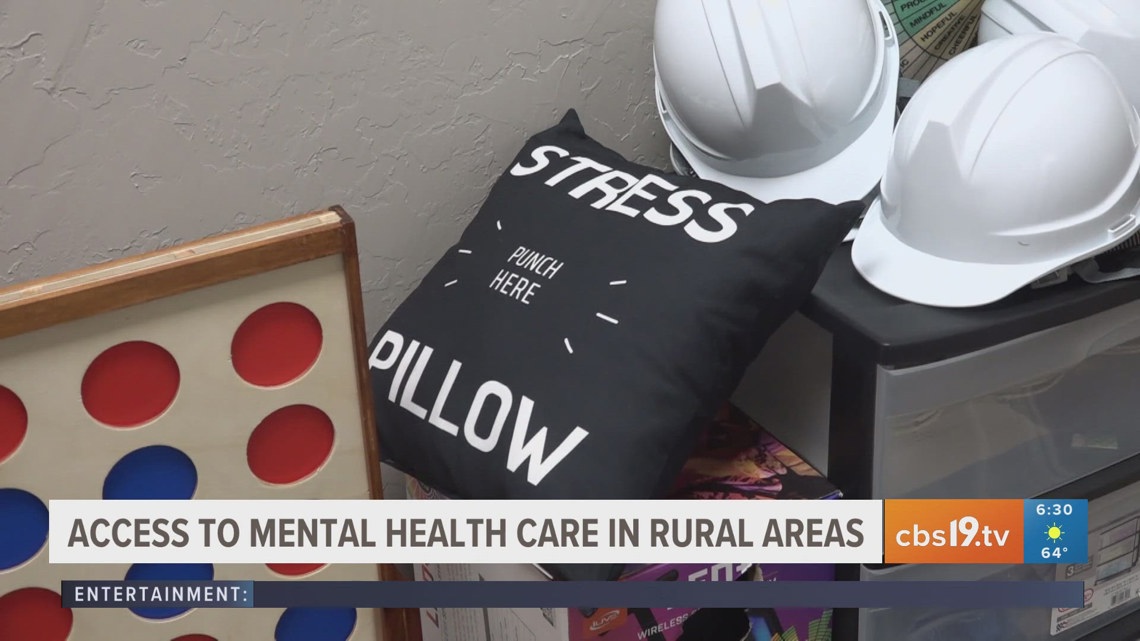
“This room is the amp up your mood room, this is where we have music therapy,” said Christy Copeland, licensed professional counselor and founder of the Copeland Center in Longview. “This room is called the express yourself, coping through art and creativity.”
She’s been running her private practice in Longview since 2019.
“I think that it’s important that everybody has an outlet. There’s so many things that we go through. I wanted to be that outlet in that safe space for other people,” Copeland said.
Copeland said many of her clients struggled to find accessible mental health care in East Texas.
“Countless number of times got received calls and said, ‘wow, I’m so glad you were able to take me, because I wasn’t able to get in anywhere else.’ And so that there’s also, like, waiting lists and sometimes because of caseloads and because of the need,” Copeland said.
She believes the lack of access is even more severe for marginalized groups and younger patients.
“I think a lot of it has to do with the fact that we have marginalized groups here, and there’s not a lot of diversity with the mental health professionals,” Copeland said. “There is a shortage of providers for children and adolescents as well. We don’t have an inpatient facility here for children and adolescents all the way up to age 49.”
Dr. Evan Dolive with Greater Longview United Way said rural areas like East Texas face the greatest disconnect from mental health services.
“If you look at our community and look at our area now that there are gaps in people’s services, there’s holes in our social safety nets that people are slipping through,” Dolive said. “And so for us, we want to be that bridge builder, to bridge the gap for people so to help connect them to where they are, to where they need to be. So whether that’s providing resources or counseling or programmatic funding or direct donations and gifts, we’re able to connect that person to a service.”
Dolive says 44 percent of Gregg County residents live at or below the poverty line, and without healthcare access, that stress only grows.
“In 2024 in Texas, they passed a law that licensed professional counselors can now accept Medicare. So that’s another way that people can receive those services. And then you have your local community clinics who generally provide a sliding scale, and most people don’t know that so they can get in and receive mental health services, and it’s income based.”
Copeland encourages people to check with insurance providers, employers for EAP programs, community clinics or directories like Psychology Today to find support.
“I want people to not be afraid, to get help, not to not be afraid to to talk, to not be afraid to express what’s going on. And so that we can get rid of that stigma,” Copeland said.
link