
PUEBLO, Colo. (KKTV) – Every 11 minutes, a person dies by suicide according to the CDC.
And suicide is a tragedy which impacts so many.
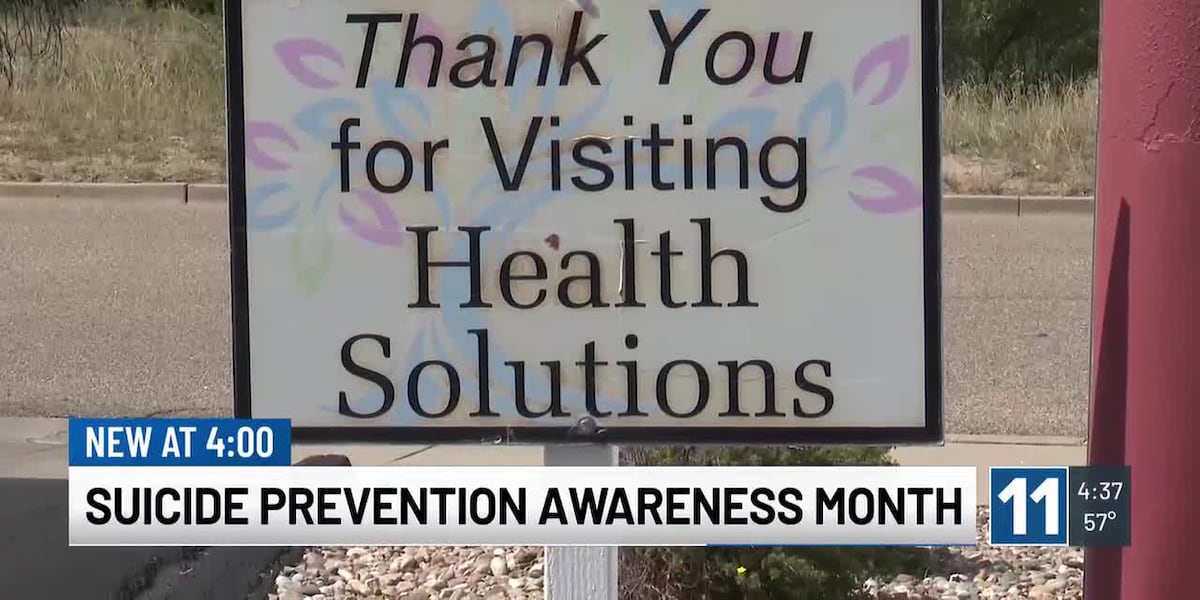
So to try to prevent these tragedies from happening, Health Solutions, a non-profit community medical and behavioral health treatment provider in Pueblo, wants to make sure you know what to do if someone you know is experiencing suicidal thoughts.
Health Solutions says between 2019 and 2023, over 30 people per 100,000 in Pueblo County alone, died by suicide.
Director of Health Solutions Acute Treatment Unit, who oversees the Colorado National Collaborative Grant, Melissa Ayala, tells 11 News, “Suicide is very prevalent in our community and most people have been affected by suicide.
Ayala continues saying, “When I ask the question who in this room has been impacted, or knows somebody, or has somebody that they know who’s died by suicide, everybody in the room raises their hand.
“So suicide is very prevalent.
“We all are impacted by suicide and we all have a role in suicide prevention.”
September is Suicide Prevention Month and so Health Solutions is using this month to remind people about their role of preventing suicide.
Furthermore, Ayala tells 11 News, “When someone is experiencing suicidal ideation, there’s a lot of stigma connected to suicide.
“A lot of people feel like, ‘Oh, I don’t know what to say. I don’t want to say the wrong thing’ and what makes up some of those warning signs is really paying attention.
“So, what are they saying verbally?
“What are some of the nonverbal cues
“Are there things that are happening in their lives that are situational, you know, have they just lost a loved one to suicide, have they experienced loss of a job, have they lost a significant relationship, have they just been diagnosed with an illness that has really impacted their lives?
“So those are all situations that we should be well aware of.
“And then we look at behavioral clues.
“Are they withdrawing?
“Are they acting out in more aggressive ways?
“We see that a lot with our young males, where we know that masculinity is seen as more of an aggressive type characteristic.
“So, for men (they) can express that more easily than (they) can express hopelessness or sadness or despair.
“So, really paying attention to all of those different puzzle pieces helps us to kind of send off that sense of something is not right here.
“And then what we need to do is ask the question.
“Many of us say, ‘Wow, they’re not doing well. We need to pay attention. I’m putting all these puzzle pieces of warning signs and risk factors that they may be experiencing (suicidal thoughts),’ but are we really then asking the question?
“And that’s where the importance of suicide prevention really comes in, because we have this concept or stigma that if we ask the question that may lead them into that
“However, that is absolutely false.
“We cannot put that in their head.
“They are already having those thoughts and those experiences and they just want someone to listen.”
Elaborating on aggressive behaviors as warning signs, Ayala also says, “The young male who in his classroom, you know, punches a hole in the wall and we often times send them away and we reject them, instead of opening the door and saying, ‘Hey, let’s sit down, tell me what’s going on, are you experiencing things like you don’t want to be here anymore, are you having thoughts that you want to go to sleep and never wake up, are you thinking about ending your own life?’
“Really asking those questions, because they just want someone to hear and to listen and be supportive.”
Additionally, regarding what a person can do to help prevent this tragedy from happening, Ayala tells 11 News, “Everybody has a part to play in suicide prevention.
“You don’t have to be a psychiatrist. You don’t need to be a social worker to intervene when you know someone is really struggling and they’re having a suicidal crisis.
“You can ask the question and it’s not for you to solve the problem right in that moment, the likelihood is that you’re not going to solve the problem, but what you might do is just keep them alive for that moment and that’s really what suicide prevention is all about.
“We know that emotions are fleeting.
“We all experience, you know, a multitude of emotions every single day.
“From the time we wake up, (to) the time we go to bed, we go through lots of different emotions and thoughts and so really it’s how do we keep this person alive right now to get them to someone who can support them and help them.”
As for how to go about keeping someone alive in the moment, Ayala says, “Listen, just be supportive.
“Give yourself enough time to really talk with them and then encourage them.
“This is their life so you’re not telling them what to do.
“You’re helping them to help you get them the support they need.
“So, really it’s like asking them, ‘Will you let me help you get help?’
“‘Will you come with me? Can we make this phone call together’ and really letting them dictate their life and have some of that self-determination of what happens next, but really just being that supportive ear.”
Ayala says once they agree to getting that help, it’s important to get them to the resources that are right for them, like calling the 988 Crisis Help Line, or walking them into Health Solutions Crisis Living Room and getting them the support they need through that.
Also, Ayala says asking them, ‘Hey, can we call a friend,’ ‘Can we call a family member that can come sit with you tonight, so you’re not alone,’ ‘How can we support you and (who) are the people in your life that are going to provide that support?’”
Moreover, Ayala tells 11 News, “We know through statistics and through research that children, especially adolescents, tend to think about suicide a lot more often than adults, however, adults tend to attempt far more than younger people do.
“However, it’s more about how to provide that support for our young people to support one another.
“We know too through research that adolescents and young people there’s a great deal of peer influence that happens within that age population.
“And so how do we create a safe space where kids feel like they can support one another.
“I think there’s some great resources out there like Safe2Tell, there’s different programs within the schools that are being offered about suicide prevention and peer supports and things along those lines.
“And I think it’s still about the concept is the same, we have to ask the question.
“Whether they are 10 (years old), or 15 (years old), or 25 (years old), or 65 (years old), we have to be willing to ask the question and say the word.
“There’s a huge stigma just around the word suicide and people shy away from it.
“And so our goal within the coalition is that we provide education and awareness.
“So we are out in the community, whether it’s school districts, or community engagement, or just in different agencies.
“We know that there’s a high prevalence of suicide within the construction industry, so industries alone have higher rates of suicide than other industries.
“So we’re out there doing education through our QPR trainings, which is question, persuade, refer.
“So, how do we ask the question and how do we look for those warning signs and those risk factors and then where do we refer them and get the support and help they need.
“You don’t need to be a mental health professional, or social worker, or psychiatrist in order to intervene if someone’s in a suicidal crisis.”
As for her message to those who may experiencing suicidal ideation, Ayala tells 11 News, “You’re not alone.
“There are so many people struggling with those same thoughts.
“I know that individuals who suffer with a suicidal crisis or have those thoughts, whether it be passive suicidal thoughts, or they actually come up with a plan and they think about how they would carry it out or when they would carry out their suicide, they feel so isolated and they feel so alone in the pain and the grief that they’re experiencing.
“And so my message to all of them is that you are not alone in that.
“People all over the world are experiencing this.
“And so really understanding that this is something you can get support for, this is something you can get help from and there’s nothing wrong with you.
“This is truly about just getting support and help and there are people who are willing to listen and willing to help you navigate that.
Regarding her message to those whose loved one may be having suicidal crises, Ayala says, “Listen.
“Listen, empathize, listen without judgement.
“It’s really important when we go through trainings about how do we ask the question about suicide, there’s often a sense of judgement connected to it, not intentionally. very subconsciously.
“We will say things like, ‘You’re not going to do something stupid are you?’
“Or ‘You’re not going to kill yourself, that’s a dumb idea.’
“So those types of statements or questions come off very judgemental and become very rejected by the individual that feels suicidal, feels really rejected by those comments.
“And so, really coming from a place of non-judgemental and really understanding and empathizing with that person and just listening.
“We get so caught up in our own lives and our own day-to-day activities that we forget to just stop, just stop, listen support and without judgement.”
When it comes to the importance of knowing what to do, Ayala tells 11 News, “It’s so important to know what to do so that we reduce the amount of suicides in our community, that’s the goal.
“So really it’s about how do we feel equipped, how do we feel confident, not only as an individual, but as a member of this community to feel like we can talk to somebody about their suicidal thoughts and crisis.
“We often say, ‘There’s 8 billion people in the world and it’s really bizarre when we say I feel so alone and feel so isolated.’
“And so really it’s just about opening our ears, opening our hearts and just being available to talk and to listen to someone, really that’s all they’re looking for is just to be heard.
“So if we can create that environment as a community where people feel like they’re heard, then we can ultimately reach our goal of preventing suicides.”
Ayala also tells 11 News, “We want suicide prevention to be very well-known in our community.
“We want it to be something that everyone feels like they have a role in, that they have a part to play in suicide prevention and so how do we continue to bring everyone together in order to support that cause and it’s everybody’s business.”
Copyright 2025 KKTV. All rights reserved.
link