
Why Hardening Campuses Requires More than Technology
Beyond tech, true campus security relies on human behavior. Explore how CPTED, visitor protocols, and training create a robust “human firewall.”
Security technology is embedded into the fabric of the modern school campus. Video intercoms greet visitors. Cameras are commonplace. Teachers and students swipe access cards. Lockdown buttons sit ready at the front desk. Metal detectors are common.
When these measures work as intended, students and staff move through their day without thinking much about them. They feel protected without feeling confined. But when security is poorly implemented, these systems’ presence can be perceived as intrusive or even punitive. That is never the goal.
To avoid this scenario, security professionals should seek to “build castles, not prisons.” To achieve this goal, conversations typically focus on hardware and software. Instead, let’s take a look at the role of human behavior in hardening security “the right way.” After all, physical security solutions and policies are only as effective as the people using them.
Start with the Perimeter and the Basics
Similar to a castle’s “moat,” the first layer of campus security is the property’s perimeter. Fencing, gates, the building envelope, doors, and windows – these define where a campus begins and where access must be controlled. Today, perimeters are secured, managed, and monitored using a range of electronic security solutions. However, architectural and operational factors also play a significant role.
Crime Prevention Through Environmental Design (CPTED) principles encourage planners to think carefully about visibility, access points, and vulnerabilities.
New construction offers architects the freedom to balance aesthetic considerations with safety realities from the ground up. For example, floor-to-ceiling glass at the front of a school may look welcoming, but it also introduces vulnerability. In retrofits, where expansive glass entryways already exist, steps can be taken to fortify the glass with security film or replace it with laminated glass.
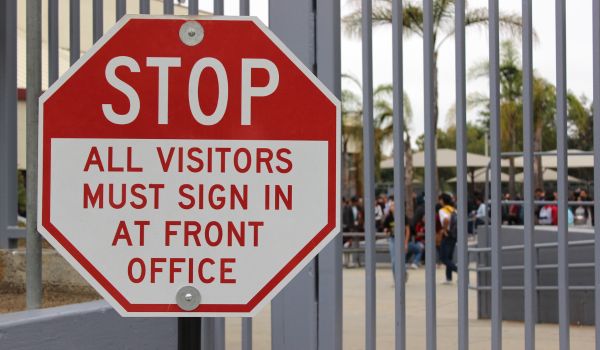
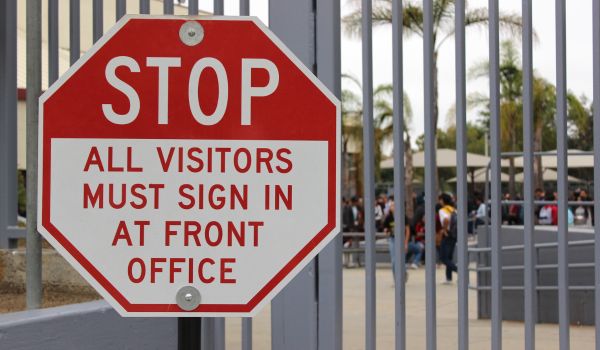
CPTED recommends that signage and lighting make it obvious when someone is transitioning from a public area into a secured space. Entry points should be limited and clearly marked, so that visitors naturally funnel toward them. And landscaping should be managed so that trees and shrubs do not obstruct sightlines or create concealed areas where someone could approach a building unnoticed.
Vehicle access must also be evaluated and managed as a part of perimeter security. Campuses often rely on gates to regulate access, but it is easy enough for an unauthorized vehicle to slip through closely behind an authorized one.
A more secure but more expensive option uses two successive gates; the second one opens only after the first has shut, preventing tailgating by allowing only one vehicle at a time. Electronics at the gate should issue an alert when tailgating is detected, or a car crashes through, and a human must be immediately available to investigate those alerts and follow up.
link